

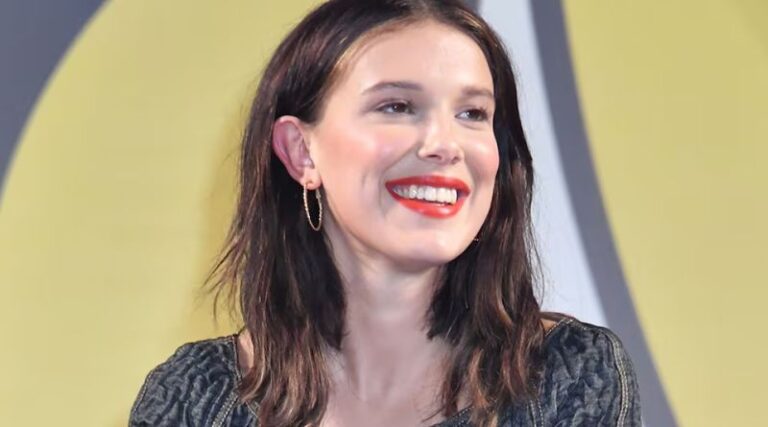
From Early TV Roles to Global Stardom — The Career That Built a Fortune
There are very few people in the entertainment industry who can honestly say they were building a serious acting career before most of their peers had finished middle school. Millie Bobby Brown is one of them. The British actress began her professional journey at an extraordinarily early age, landing her first role in the television series Once Upon a Time in Wonderland in 2013 — a credit that most people have forgotten about entirely because of everything that came after it. That early work showed a level of comfort on camera that most adult actors spend years trying to develop, and it laid the groundwork for a breakthrough performance that would change her life and career permanently. By the time she appeared in Intruders in 2014, she was already developing a reputation within the industry as someone worth watching — but nothing in those early years fully prepared the public for what happened when Stranger Things arrived in 2016.
The role of Eleven — a mysterious, telekinetic child with a shaved head and an extraordinary emotional range — became one of the most talked-about character introductions in modern television. Millie Bobby Brown‘s portrayal of Eleven in Stranger Things earned immediate critical acclaim and generated the kind of cultural conversation that most actors never experience once in their careers, let alone at thirteen years old. The awards and nominations followed quickly, including two nominations for the Primetime Emmy Award for Outstanding Supporting Actress in a Drama Series — a recognition that placed her alongside performers with decades of experience and confirmed that her work was being taken seriously at the highest levels of the industry. Those Emmy nominations were not just symbolic — they were career-defining moments that shifted her market value and opened doors that would eventually contribute directly to a net worth of $20 million before she reached her early twenties. From a purely financial perspective, the Stranger Things franchise was the engine that built her fortune, and the salary progression across its seasons tells that story clearly.
From Stranger Things to Godzilla — Expanding a Career Across Film and Television
What separates Millie Bobby Brown from other young actors who break through on a single hit show is the deliberate way she has expanded her career into film and other franchises rather than allowing herself to be defined entirely by one role. Her work in Godzilla King of the Monsters in 2019 introduced her to a completely different audience — one drawn to large-scale action and science fiction blockbusters rather than the nostalgic horror-drama world of Stranger Things. She returned to that franchise as Madison Russell in Godzilla vs. Kong in 2021, cementing her place in one of Hollywood’s most commercially successful monster universes and adding significant box office credentials to a resume that was already impressive by any standard. These film roles expanded her visibility globally in markets where Stranger Things had strong streaming numbers but where theatrical releases carry additional cultural weight, and they contributed meaningfully to her earnings and her profile as a prominent figure in the entertainment industry.
The Enola Holmes franchise added yet another dimension to her career, positioning her not just as an actress but as a producer — a role that comes with both creative input and a separate financial upside that most actors at her age never access. Her $6.1 million salary for the first Enola Holmes film, combined with a $500,000 producer payday and potential $800,000 in performance bonuses, represented a significant leap from her Stranger Things earnings and reflected how quickly her market value had grown. The flat $10 million salary for Enola Holmes 2 confirmed that she had reached a tier of Hollywood compensation that very few performers — of any age — ever achieve. Together, the Stranger Things seasons, the Godzilla franchise, and the Enola Holmes films account for the bulk of the earnings that have produced her $20 million net worth, though the financial picture extends well beyond acting alone.
Florence by Mills, Modeling, and the Entrepreneur Behind the Actress
One of the most interesting and underappreciated aspects of Millie Bobby Brown‘s financial story is what she has built outside of film and television. In 2019 — the same year she appeared in Godzilla King of the Monsters — she launched Florence by Mills, her own beauty and skincare line aimed at promoting self-expression and clean beauty for a generation of young consumers who were increasingly skeptical of traditional cosmetics marketing. The brand was not a celebrity vanity project or a simple licensing arrangement — it was a genuine entrepreneurship venture built around a clear point of view and a specific audience, and it has grown into a commercially successful business that adds a meaningful and independent revenue stream to her overall net worth.
The modeling work that has run alongside her acting and entrepreneurship has similarly reinforced her position as a prominent figure across multiple industries simultaneously. Her ability to move between the entertainment industry, the beauty world, and brand partnerships without losing credibility in any of them reflects a level of strategic awareness that most people develop much later in their careers. She has also used her platform to advocate for various social causes, which has deepened her connection with audiences who care about the values behind the brands they support — a factor that matters enormously to the clean beauty consumer base that Florence by Mills targets. The combination of a record-breaking television career, blockbuster film franchises, a producer credit on a major Hollywood film, a thriving skincare line, and consistent modeling work tells the full story of how a British actress who started on a minor television series in 2013 built a $20 million net worth through talent, timing, and a genuine instinct for entrepreneurship that has set her apart from almost every other performer of her generation.
